About Tea
Green Tea - Camellia sinensis
January 22, 2026
During the Mongol rule of China (from the early 1200s to 1368), tea lost much of its popularity and was considered a casual drink. But during the Ming Dynasty (1368-1644), new and innovative methods of processing the leaves led to a renewed interest in tea, and the drink became popular again throughout the country.
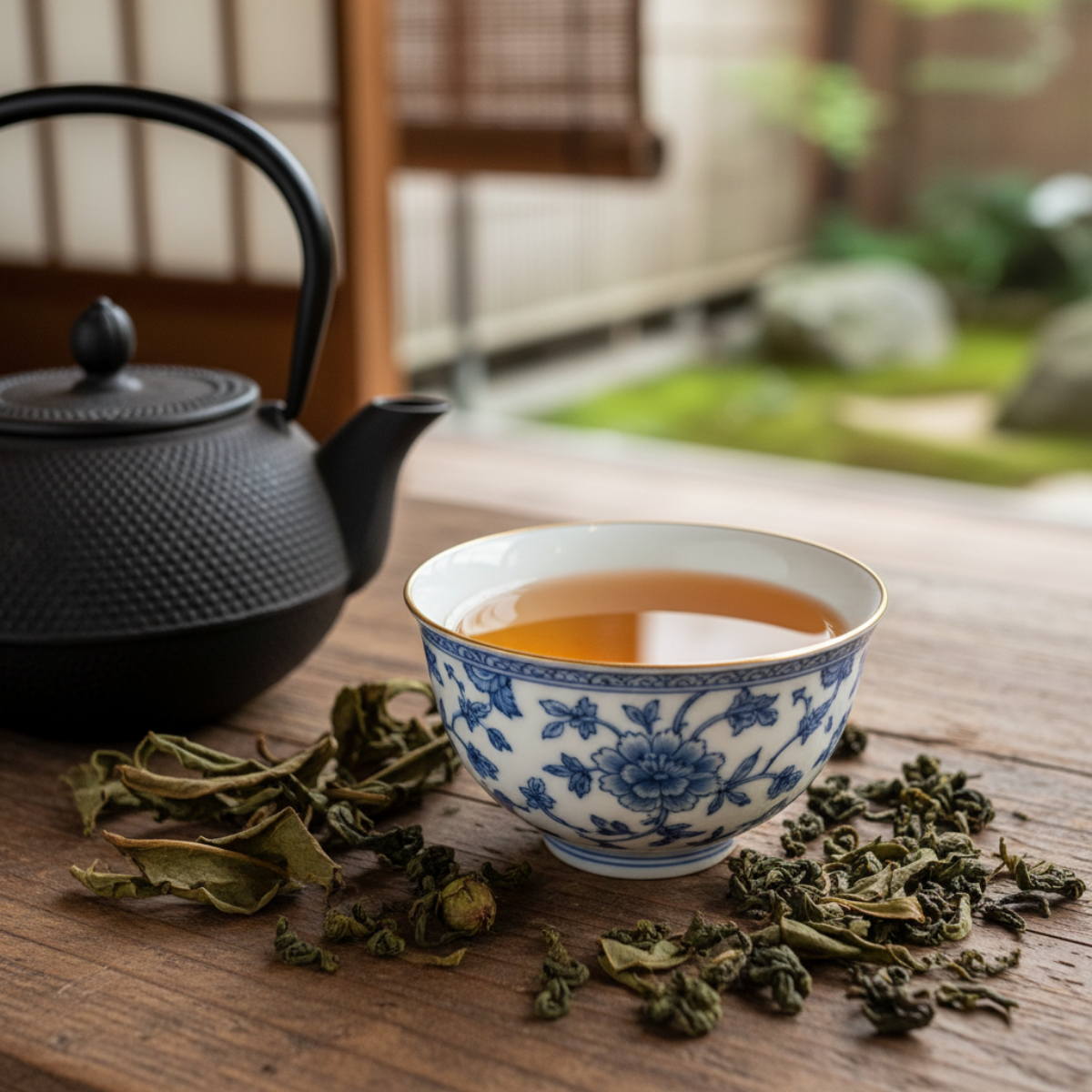
Instead of being ground into a powder, the leaves were now picked, wilted, rolled, oxidized, and dried. The new process created a product made up of loose leaves that, when steeped in warm or hot water, yielded a delicious, full-bodied, silky-flavored drink—the kind we enjoy today.
From that point on, tea infusion, added to hot water to prepare the drink, began to be used throughout the country.
A testament to the popularity of loose-leaf tea is the fact that Emperor Hong-wu, the first ruler of the Ming Dynasty, ordered that imperial tribute be delivered to him in loose-leaf tea, rather than in bricks as had been the case up until then.
Not only did this type of tea taste much better, it was also easier to process. The leaves were roasted rather than steamed, which saved a lot of time.
In China, tea is still processed this way today, while steaming is still used in Japan.