History
Tea in the Victorian Era
February 4, 2026
In 1878, Samuel Phillips Day wrote in his book “Tea: Its Mystery and History” about working-class families: “What was once considered a luxury has now become, if not an absolute necessity, at least one of our ordinary daily necessities… Consumed by all classes of society, serving not only as a simple element of the diet, but also as a refreshing and invigorating drink, tea cannot be over-estimated.”
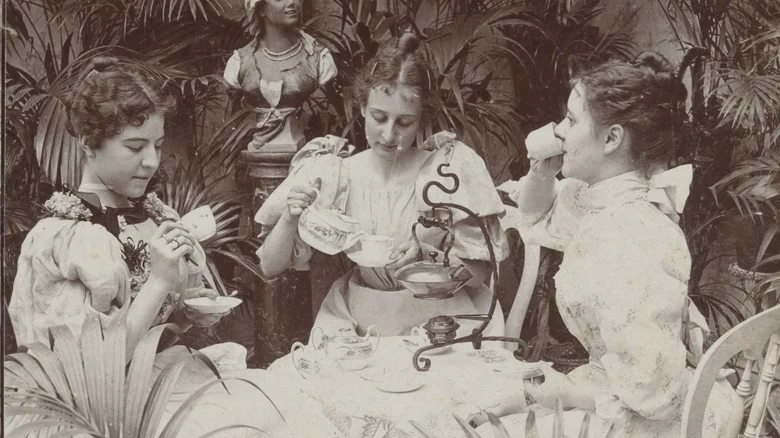
By 1901, with the death of Queen Victoria, tea had become a popular drink in England. Its importance to the lower classes was exemplified by the women of the villages (especially in Wales), who sometimes gathered and organized “tea clubs.” The purpose of these clubs was to gather in the afternoons, gatherings for tea, gossip, advice, and so on. When women had money problems, responsibilities were divided: someone brought the tea, someone brought the biscuits or rolls, someone brought the kettle, etc.
Tea was served in elegant mansions, in modest country cottages, after tennis matches, at picnics, after bike races – in other words, wherever people gathered together.
Tea brings people together regardless of the time of day or year, the economic or political context.
Tea is a state and a way. It is a joy, a moment of peace and closeness.